


 PLATFORM UPDATE:


Smart controlled-release delivery of Pennisetum purpureum embedded supramolecular nanoparticles to reduce atherosclerotic plaque

Abstract
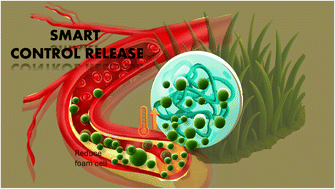
Vascular disease continues to be the primary cause of mortality and disability, often attributed to atherosclerosis. The present pharmacological treatment of atherosclerosis has limited therapeutic effectiveness. Herein, we report the synthesis of supramolecular nanoparticles through host–guest interactions involving β-cyclodextrin (β-CD), polypropylene glycol (PPG), and folic acid (FA) to create FA-PPG-β-CD, which effectively encapsulates bioactive compounds from Pennisetum purpureum extract for the smart control release of foam cells in atherosclerotic plaques. Pennisetum purpureum-loaded nanoparticles can spontaneously self-assemble into nanostructures, exhibiting unique characteristics such as intrinsic green fluorescence and high structural stability. More importantly, nanoparticles embedded with Pennisetum purpureum exhibit well-controlled drug release due to their thermoresponsive properties. Moreover, an in vitro investigation revealed that Pennisetum purpureum-loaded nanoparticles reduced foam cell production due to the elevated temperature associated with inflammatory conditions. Notably, in vivo studies have shown that Pennisetum purpureum-loaded nanoparticles rapidly eliminate excess foam cells from atherogenic lesions in the abdominal aorta. Moreover, in vivo hematology, liver, and kidney function values remained within physiological limits following treatment with Pennisetum purpureum-loaded nanoparticles, indicating excellent biocompatibility and no adverse effects on other organs. To the best of our knowledge, this is the first report of supramolecular nanoparticles encapsulating bioactive compounds from Pennisetum purpureum extract for targeting foam cells in inflammatory diseases.
 Please wait while we load your content...


