


 PLATFORM UPDATE:


Electrochemical biosensors for vancomycin monitoring in blood: advances, strategies, and future perspectives
 †a
and
Nageh K.
Allam
*ab
†a
and
Nageh K.
Allam
*ab
Abstract
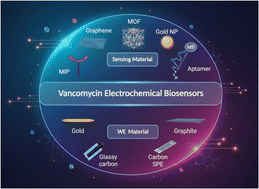
Vancomycin is a critical antibiotic for treating life-threatening infections caused by resistant bacteria. Due to its narrow therapeutic window and complex pharmacokinetics, regular monitoring of vancomycin levels is essential to prevent toxicity and minimize the risk of resistance development. Traditional methods for vancomycin analysis, such as chromatographic and immunoassay techniques, are often time-consuming, expensive, and sometimes lack sensitivity and specificity. Recent research has explored electrochemical biosensors as a promising alternative for rapid, cost-effective, and highly sensitive vancomycin detection. These biosensors leverage various electrode modifications and molecular recognition elements, including aptamers, graphene, gold nanoparticles, and molecularly imprinted polymers, to enhance selectivity and sensitivity. This review provides a comprehensive overview of the electrochemical methods for vancomycin detection in human and animal blood samples. It highlights different sensor designs, their advantages and limitations, and compares single-use and reusable biosensors. By analyzing the effectiveness and practicality of each approach, this review aims to guide future advancements in electrochemical biosensing for therapeutic drug monitoring.
 Please wait while we load your content...


