


 PLATFORM UPDATE:


Emerging nano sensing technologies for the detection of biological and chemical food toxins
 *a
Hazrat
Hussain
a
*a
Hazrat
Hussain
a
Abstract
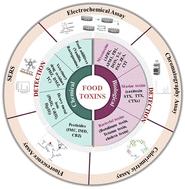
This document presents advancements in contemporary detection technologies aimed at ensuring food quality and safety. It explores a range of sophisticated sensing platforms designed to identify harmful substances in food products. The integration of nanomaterials and microfluidics has significantly enhanced these detection techniques, resulting in improved sensitivity, specificity and response times. Additionally, the document emphasizes the importance of developing portable and user-friendly sensing devices, which not only facilitate practical applications of these technologies but also address the challenges and potential solutions associated with their implementation. Emerging trends, including smartphone-based detection systems and the incorporation of artificial intelligence for data analysis, are also examined, showcasing their potential to revolutionize food safety protocols. This review emphasizes the critical importance of advanced sensing technologies in mitigating risks associated with foodborne toxins, ensuring the integrity of the global food supply chain, and highlighting the necessity for ongoing research and development to meet the dynamic challenges of food safety. It offers a comprehensive analysis of the sources, toxicity characteristics, and detection challenges linked to various classes of toxins, followed by an overview of innovative sensor-based techniques for detecting food toxins. By consolidating existing knowledge, this comprehensive review establishes a foundation for future improvements in food quality and safety measures.
 Please wait while we load your content...


