


 PLATFORM UPDATE:


RSM-BBD optimization of room-temperature synthesized ZIF-8 for synergistic adsorption-photocatalysis of RhB

Abstract
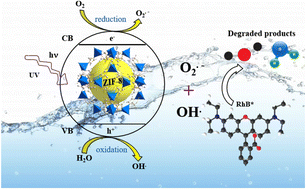
Three ZIF-8 nanomaterials with different Zn : 2-methylimidazole molar ratios (1 : 30, 1 : 50, and 1 : 70) were synthesized at room temperature in aqueous medium within 30 minutes without surfactants. Structural analyses confirmed the formation of mesoporous ZIF-8 with distinct morphologies, ranging from spherical assemblies to rhombic dodecahedra. Response Surface Methodology using a Box–Behnken design (RSM-BBD) was applied to optimize five parameters (pH, contact time, pollutant dose, linker amount, and catalyst weight) governing rhodamine B (RhB) removal. Under optimized conditions (pH 7, 70 mg catalyst, 10 ppm RhB, 60 min contact), ZIF-8 with a 1 : 70 ratio achieved a maximum adsorption capacity of 91.7 mg g−1 and a removal efficiency of ∼91%, fitting well with the Langmuir model (R2 = 0.97). Photodegradation studies revealed high activity under UV irradiation, with rate constants of 0.00812, 0.00215, and 0.0014 min−1 for ZIF-8 (1 : 30, 1 : 50, and 1 : 70), respectively. The materials also demonstrated excellent recyclability, retaining over 92% efficiency after five cycles. The novelty of this work lies in the systematic evaluation of the Zn : 2-Hmim molar ratio on the morphology and performance of ZIF-8, combined with the first application of RSM-BBD to optimize the dual adsorption–photodegradation process for RhB removal. These findings provide new insights into tailoring ZIF-8 synthesis for efficient wastewater treatment applications.
 Please wait while we load your content...


