


 PLATFORM UPDATE:

Effect of substrate pretreatment on in situ heterotrophic denitrification of nitrate-contaminated groundwater
 *ab
*ab
Abstract
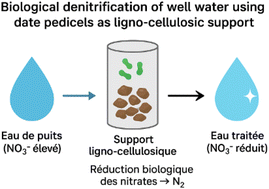
Intensive use of nitrogen fertilizers in Algeria has caused significant nitrate pollution of groundwater, with concentrations reaching 218 mg L−1 in the Khemis-el-Khechena region, well above the permissible limit of 50 mg L−1. This study investigates an economical and sustainable biological treatment using date pedicels, an abundant agricultural by-product, as both a carbon source and microbial support for heterotrophic denitrification. Date pedicels were pretreated with 0.5% sodium hydroxide for two hours to enhance biodegradability. Batch experiments showed optimal nitrate removal with 10 g L−1 of treated biomass, neutral pH, and a substrate-to-nitrate ratio of 67 g L mg−1. Applied to real groundwater (212 mg per L NO3−, pH 7.3), nitrate concentrations decreased to 15.3 mg L−1 within seven days, with 4.3 mg per L nitrites detected. A pilot-scale continuous system simulating an in situ bioreactor achieved nearly complete nitrate removal from the first day, with minor nitrite accumulation (0.8 mg L−1 decreasing to 0.3 mg L−1 by day five). Secondary treatment is still required to meet drinking standards, although natural processes such as oxygenation and filtration could further improve water quality.
 Please wait while we load your content...


