


 PLATFORM UPDATE:

A nanocarrier delivery system of oxaliplatin for glioblastoma: synthesis and cytotoxicity of Fe3O4@SiO2/OXA nanocomposites
 a
Indry Milena
Saavedra Gaona,
d
Jahaziel
Amaya,
a
Rolando Javier
Rincón Ortiz
e
a
Indry Milena
Saavedra Gaona,
d
Jahaziel
Amaya,
a
Rolando Javier
Rincón Ortiz
e
Abstract
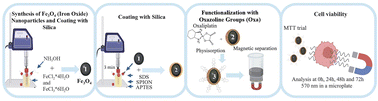
Among the available treatments for glioblastoma multiforme (GBM), chemotherapy is the most widely used because anticancer drugs can help shrink the tumour. Unfortunately, these drugs present several problems, such as the resistance of cancer cells, low specificity and secondary effects. Using nanocarriers for these drugs is a novel strategy that can reduce the side effects associated with chemotherapy, thereby enabling treatments that are less taxing on the body. In this study, nanocarriers based on superparamagnetic iron nanoparticles coated with silicon oxide were prepared, and the surface of the nanocomposite was functionalised with oxaliplatin, a drug commonly used in chemotherapy. FTIR, XRD, UV-Vis, TEM, and VSM techniques were employed for compositional, structural, morphological, and magnetic characterisation. FTIR confirmed the presence of iron oxide, silica, and oxaliplatin in the nanocomposites, while XRD and TEM analyses revealed the crystalline structure and size distribution of the nanoparticles. UV-Vis spectroscopy indicated the adsorption of oxaliplatin onto the nanoparticle surface, with a gradual increase in adsorption over time. The cytotoxicity of Fe3O4@SiO2/OXA was also evaluated against T98G glioblastoma and BHK-21 non-tumoral cell lines using MTT assays. Fe3O4 and Fe3O4@SiO2 alone showed minimal cytotoxicity, while the functionalised nanocomposite demonstrated a significant reduction in cell viability, particularly at higher concentrations (IC50 of 15 ppm at 72 h), compared to free oxaliplatin. This enhanced cytotoxicity was attributed to the adsorption of oxaliplatin on the nanoparticle surface, amplifying its activity and indicating that functionalisation with oxaliplatin is crucial for the observed therapeutic effects. Fluorescence microscopy and TEM analyses revealed that the Fe3O4@SiO2/OXA nanoparticles were effectively internalised by T98G cells, accumulating primarily in the perinuclear region. Ultrastructural changes, such as mitochondrial swelling, were observed in the treated cells, suggesting that the nanoparticles may induce cellular damage upon internalisation. These results suggest that the nanoparticles enter cells via endocytic pathways, potentially enhancing the therapeutic effects of oxaliplatin through more efficient intracellular drug delivery. These findings highlight the potential of Fe3O4@SiO2/OXA as a promising nanocarrier for targeted cancer therapy, with further research needed to elucidate the precise mechanisms of drug release and action within the cell.
 Please wait while we load your content...


