


 PLATFORM UPDATE:


Golden eyes on pollutants: colorimetric detection of emerging contaminants with AuNPs

Abstract
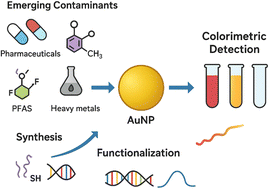
Emerging contaminants (ECs), including pharmaceuticals, endocrine disruptors, heavy metals, and per- and polyfluoroalkyl substances (PFAS), are becoming increasingly crucial to identify because of their toxicity, persistence, and resistance to traditional water treatment techniques. Even if they are accurate, traditional analytical methods are frequently costly, time-consuming, and instrumentally complex. With its ease of use, quick visual reaction, high sensitivity, and affordability, colorimetric sensing based on gold nanoparticles (AuNPs) has become a viable substitute in this regard for on-site EC monitoring. The synthesis, functionalization, and use of AuNPs for the colorimetric detection of new pollutants have advanced recently, as this review illustrates. Because of their special localized surface plasmon resonance (LSPR) characteristics, AuNPs can interact with target analytes to produce noticeable color changes. We talk about different synthesis techniques, such as the reduction of citrate and borohydride, and how they affect the optical characteristics and particle shape. Additionally, we investigate functionalization techniques that provide selectivity toward ECs using thiol ligands, DNA aptamers, polymers, and chelating agents. A thorough analysis is conducted of colorimetric detection techniques, encompassing both aggregation-based and non-aggregation-based systems. Detecting ions (cation, anion), pesticides, metals (heavy metals, alkali and alkaline earth metals, coinage metals, rare-earth metals), food (formalin, melamine, rhodamine dye, etc.), pathogens, mycotoxins, oligonucleotides (DNA, nucleic acids, protein, etc.), glucose, and drugs (antibiotics, allergens, etc.) has been examined in this review. Lastly, we discuss present issues such as probe stability and matrix interference and suggest future paths for the development of portable and field-deployable sensors.
- This article is part of the themed collection: 2025 Reviews in RSC Advances
 Please wait while we load your content...


