


 PLATFORM UPDATE:


Activated carbon synthesised from lignocellulosic cocoa pod husk via alkaline and acid treatment for methylene blue adsorption: optimisation by response surface methodology, kinetics, and isotherm modelling

Abstract
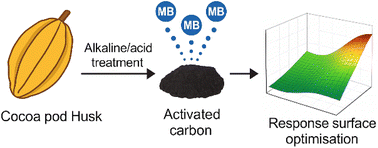
This study reports the green synthesis of activated carbon (ANC) from Cocoa Pod Husk (CPH), a lignocellulosic agrowaste, using sulphuric acid and sodium hydroxide treatments for Methylene Blue (MB) removal. Among the synthesised samples, ANCSH5 (NaOH, 5 M) exhibited superior performance due to extensive delignification, enhanced graphitization, and an abundance of oxygenated functionalities, as confirmed by Fourier Transform Infrared (FTIR), Scanning Electron Microscopy – Energy Dispersive X-ray (SEM–EDX), the Brunauer–Emmett–Teller Method (BET), X-ray Diffraction (XRD), Point of Zero Charge (pHPZC), and Raman analyses. ANCSH5 achieved 92% MB removal (1.16 mg g−1), surpassing CPH (24%, 0.30 mg g−1) and ANCSA10 (44%, 0.50 mg g−1). Adsorption followed pseudo-second-order kinetics, while equilibrium data fitted best to the Freundlich, Sips, Toth, and Redlich–Peterson models (R2 > 0.999). Process optimisation via a central composite design (CCD) and Response Surface Methodology (RSM) determined optimal conditions (49.6 °C, pH 6.0), achieving a 99.05% removal rate. Importantly, isotherm modelling predicted a competitive qmax of 100 mg g−1 for ANCSH5 under practical conditions. Unlike conventional biomass carbons, the hemicellulose-rich CPH precursor promoted extensive delignification, partially graphitised domains, and tailored surface chemistry, providing a distinctive adsorption mechanism. These features underscore CPH valorisation as a sustainable route to high-performance, low-cost adsorbents for dye remediation in cocoa-producing regions.
 Please wait while we load your content...


