


 PLATFORM UPDATE:


Remediation of malachite green-laden wastewater by plant-loaded metal oxide nanocomposites

Abstract
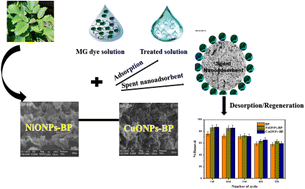
The aquatic environment is being endangered by contamination by organic dyes, which can lead to severe environmental pollution. This study presents the formation of nickel- and copper oxide-loaded Bryophyllum pinnatum (BP) nanocomposites (NiONPs-BP and CuONPs-BP) by a thermo-chemical precipitation process for sequestration of malachite green (MG) dye from a synthetically prepared aqueous solution. The synthesized nanomaterials were examined using FTIR, SEM, XRD, TGA and BET characterization techniques. The findings from the characterization techniques showed the distribution and impregnation of NiO and CuO on BP. The maximum adsorption capacities of NiONPs-BP and CuONPs-BP were 28.77 mg g−1 and 13.66 mg g−1, respectively. Isotherm and kinetic studies of catalytic MG dye removal are well described by the Freundlich and pseudo-second order models. The NiONPs-BP and CuONPs-BP nanocomposites exhibited higher regression values along with low error compared to BP, and proved better adsorbing materials. The spontaneous nature of MG adsorption was demonstrated by thermodynamic studies. For NiONPs-BP, ΔS° > 0 indicated increased disorder at the solid/liquid interface, while ΔH° > 0 confirmed the endothermic nature of adsorption. In contrast, adsorption on CuONPs-BP was also accompanied by increased disorder (ΔS° > 0) but proceeded through an exothermic process (ΔH° < 0). High removal efficiency was recorded after five successive reuse cycles, indicating remarkable stability and reusability of the nanocomposites. Therefore, NiONPs-BP and CuONPs-BP composites were suggested to be efficient adsorbing materials for remediating wastewater polluted with MG dye.
 Please wait while we load your content...


