


 PLATFORM UPDATE:


Levels of polycyclic aromatic hydrocarbons around a scrap iron and steel recycling industry and the associated health risk assessment

Abstract
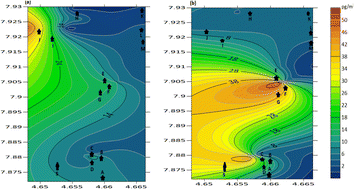
The recycling of iron and steel is among the booming sectors in the Sub-Saharan countries of Africa. However, these industries generate different air pollutants due to inadequate control devices and a lack of monitoring by government control agencies. In this study, the levels of ambient air concentration and distribution of PAHs around a steel and iron scrap melting industry were investigated. Health indices including the incremental lifetime cancer risk (ILCR) and hazard quotient (HQ) were utilized to access the potential health effects of human exposure to PAHs in the ambient air surrounding this facility. The PAHs in the ambient air were collected using passive samplers in accordance with the procedures outlined in the South Pacific Regional Project's Annex 3. The quantification of PAHs was done using GC-MS. The results showed that the ∑ PAHs ranged from 49.6 to 530.1 pg m−3 in the dry season and 27.5 to 498.6 pg m−3 in the wet season. The ∑ carcinogenic PAHs ranged from 2.5 to 115.7 pg m−3 in the dry season and 1.7 to 28.6 pg m−3 in the wet season. The average ILCR for the wet season was 1.5 × 10⁻⁵ for children and 1.33 × 10⁻⁵ for adults, while for the dry season, the mean ILCR values were 2.7 × 10⁻⁵ for adults and 2.4 × 10⁻⁵ for children. Additionally, there was a considerable noncarcinogenic risk shown by the calculated hazard quotient, which was several times greater than that of the permissible limit of 1. The analysis quantified the concentrations of PAHs in the vicinity of the scrap iron and steel company and recommended the use of modern air control devices to control air emissions.
 Please wait while we load your content...


