


 PLATFORM UPDATE:


Quantitative proteomic and glycoproteomic analysis identifies CLCA1, FBN1, and FGB as potential biomarkers for ulcerative colitis
 *bcd
*bcd
Abstract
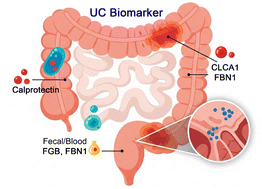
Ulcerative colitis (UC), a prevalent inflammatory bowel disease (IBD), significantly increases the risk of colorectal cancer with prolonged duration. Current diagnostic approaches for UC rely on clinical symptoms, inflammatory markers, and endoscopic findings. However, these methods often face challenges due to symptom overlap with Crohn's disease (CD) and other gastrointestinal conditions. This highlights a critical need for reliable biomarkers in human body fluids for accurate UC diagnosis and effective therapeutic intervention. To address this, we employed quantitative proteomic and glycoproteomic analysis using liquid chromatography-mass spectrometry on proteins extracted from UC tissues and paracancerous (PCA) tissues. Our comprehensive findings revealed that three differentially expressed glycoproteins (CLCA1, FBN1, and FGB) are likely associated with UC, although their expression patterns differ slightly different from those in CD. Site-specific glycosylation analysis further revealed that each N-glycosylation site contained distinct N-glycans, and their fold changes are similar to the overall protein changes. We validated both the protein and gene expression of these glycoproteins through immunohistochemistry and RT-qPCR. Gene Ontology and Kyoto Encyclopedia of Genes and Genomes analyses indicated a possible functional correlation of CLCA1 with endopeptidase activity and FGB with the collagen-containing extracellular matrix. Furthermore, enzyme-linked immunosorbent assay (ELISA) quantification of these glycoproteins in the serum of UC and CD patients showed increased expression of FGB and reduced expression of CLCA1 in both conditions, while FBN1 levels remained unchanged. These results collectively suggest that the quantitative analysis of site-specific glycosylation profiles could be crucial for differentiating UC from CD, thereby facilitating earlier and more accurate diagnosis.
 Please wait while we load your content...


