


 PLATFORM UPDATE:


Analytical green star area (AGSA) as a new assessment tool for the electrochemical determination of cyclobenzaprine hydrochloride in wastewater samples using recycled graphite-modified nitrogen-doped CQDs

Abstract
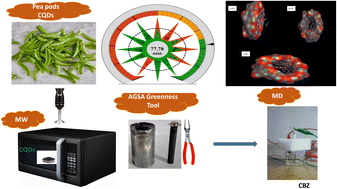
Active pharmaceutical compound consumption and their discharge into municipal wastewater via excretion are a growing danger for water quality and have considerable short-term, medium-term, and long-term impacts on environmental and human health. The objectives of this work were the detection and determination of cyclobenzaprine hydrochloride (CBZ), the most used muscle relaxant present in wastewater, with high accuracy and precision to avoid the serious environmental threat caused by the medication's overuse. The proposed electrode showed higher sensitivity with a Nernstian slope value of 57.97 ± 0.23 mV per decade in the linearity range of 1.0 × 10⁻⁷ to 1.0 × 10⁻² M and an LOD of 5.62 × 10⁻⁸. This study is also the first to corroborate the use of a graphite electrode prepared from battery rod waste for the determination of CBZ, along with modification with nitrogen-doped carbon quantum dots derived from pea pods, and L-serine amino acid (PP-NCQDs) as the indicator electrode. Using molecular docking, the α-CD ionophore was found to be the most favorable orientation of CBZ towards the highly selective ionophore in the membrane sensor. The open source and accessible nature of the Analytical Green Star Area (AGSA) facilitates cross-disciplinary comparisons.
 Please wait while we load your content...


