


 PLATFORM UPDATE:


Integrative network pharmacology and molecular dynamics analysis of Ceiba pentandra compounds with experimental support for colorectal cancer therapy

Abstract
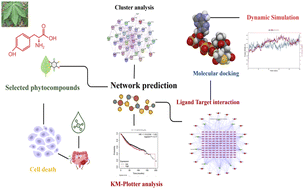
This study investigated the anticancer potential of Ceiba pentandra leaf extract against colorectal cancer (CRC) through integrated computational and experimental approaches. Twenty-nine phytochemicals were identified, of which ten compounds with high gastrointestinal absorption and drug-like properties were shortlisted. SwissTargetPrediction and network pharmacology analyses (GeneMANIA, STRING, Cytoscape) revealed 267 common targets between C. pentandra compounds and CRC-associated genes. Key hub genes included AKT1, TP53, and STAT3. Molecular docking using Schrödinger followed by MM-GBSA calculations and 100 ns molecular dynamics (MD) simulations identified kaempferol, linarin, and β-sitosterol-β-D-glucoside as the most active compounds. The 3CQU–kaempferol complex showed the greatest structural stability and favorable binding free energy, supporting strong ligand–protein interactions. KEGG and GO enrichment analyses indicated that these targets were predominantly involved in the PI3K-Akt and colorectal cancer signaling pathways. In vitro validation using the MTT assay demonstrated a dose-dependent cytotoxic effect of C. pentandra extract on HCT-116 colon cancer cells with an IC50 value of 36.9 µg mL−1, while showing good biocompatibility toward 3T3L1 fibroblast cells. Morphological changes consistent with apoptosis were observed in treated cells. Overall, C. pentandra exhibits potent, multi-target anticancer activity against colorectal cancer by modulating key oncogenic pathways. These findings integrate in silico predictions with in vitro validation, highlighting C. pentandra as a promising natural therapeutic candidate warranting further mechanistic and preclinical investigations.
 Please wait while we load your content...


