


 PLATFORM UPDATE:


Unveiling the dual potential of microalgae and seaweed biomass for sustainable biofuel production: a review
 a
and
Lala Behari
Sukla
*a
a
and
Lala Behari
Sukla
*a
Abstract
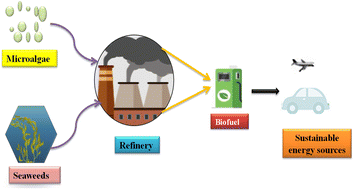
Fossil fuels account for 82% of the overall energy supply, meeting rising global energy demand. Oil accounts for 35%, coal for 29%, and natural gas for 24%. However, fossil fuels are limited and largely contribute to environmental damage. Global energy consumption is expected to rise by 2040, emphasizing the urgent need for sustainable energy solutions. Although renewable energy technologies can meet this need, they account for less than 13% of the overall energy supply. Algae have received attention as a prospective source of third-generation biofuels such as biodiesel, bioethanol, biogas, and biohydrogen. They grow quickly, consume less area, absorb more CO2, and do not compete with food crops. Algae-based biofuels are carbon-neutral, balancing CO2 emissions throughout production and usage. Algae can also be produced in non-arable regions, saving agricultural land for food production. This review focuses on the biofuel production potential of both microalgae and macroalgae. It examines the benefits, limits, and research gaps. Strategies for increasing algae-based biofuel generation are highlighted. Addressing these issues can harness algae's potential as a renewable energy source, contributing to sustainable energy solutions and lowering environmental concerns.
- This article is part of the themed collection: 2025 Reviews in RSC Advances
 Please wait while we load your content...


