


 PLATFORM UPDATE:


Exploring pocket-aware inhibitors of BTK kinase by generative deep learning, molecular docking, and molecular dynamics simulations
 abc
Li-Quan
Yang
*abc
abc
Li-Quan
Yang
*abc
Abstract
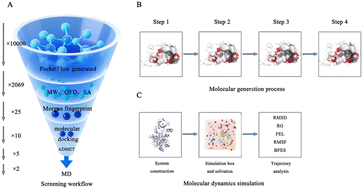
Kinases play key roles in complex life processes such as signal transduction and cell cycle regulation. The dynamic conformation of kinase pockets, which is a critical target for the development of highly selective inhibitors, still presents significant challenges in terms of target selectivity, affinity, and off-target toxicity. In this study, we propose a computational framework to explore pocket-aware inhibitors targeting the J pocket of BTK kinase by integrating generative deep learning, molecular docking, and molecular dynamics simulations. We selected 5 candidate molecules by multi-step computational screening, which consisted of molecular clustering, molecular docking, and druggable evaluation, from 10 000 molecules generated through pocket-aware design. Molecular dynamics simulations showed that these 5 candidate compounds exhibited stable conformational dynamics, localized inhibitory effects, and favorable binding free energies during interaction with the BTK kinase. However, compared to the reference inhibitor (CFPZ), two candidates (C137 and C5598) demonstrated higher binding affinity and greater potential inhibitory activity. Further energy decomposition analysis revealed that Lys29 and Arg31 form key anchor points through electrostatic complementarity and salt bridge interactions, while Trp30 and Tyr70 enhance the stability of the complex through hydrophobic and aromatic stacking interactions, collectively establishing the molecular basis for efficient binding. Our study elucidates the binding mechanism of BTK kinase inhibitors, providing theoretical support for pocket-aware design of high-affinity, low-toxicity compounds. It highlights the novelty and target specificity of the candidate inhibitors and expands the applicability of deep learning in drug development for complex targets.
 Please wait while we load your content...


