


 PLATFORM UPDATE:


Structure guided design and molecular modelling of a novel peptide–SWCNT biosensor targeting NS1 dengue virus

Abstract
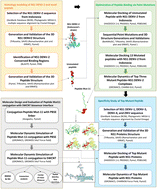
Reliable detection of the dengue virus nonstructural protein 1 (NS1) is critical for early diagnosis of serotype 2 (DENV-2) infections, especially in endemic regions such as Indonesia. Here, we report a fully in silico framework for the rational design and evaluation of a peptide–single wall carbon nanotube (SWCNT) biosensor interface targeting NS1 DENV-2. Starting from phylogenetic selection of a conserved Indonesian NS1 sequence, we combined homology modeling, advanced protein and peptide modelling to generate an initial biorecognition element, which was then optimized via point mutations predicted by binding free energy analysis. Of 13 candidates, a single variant (Mut-11) exhibited the most favorable docking score and lowest predicted ΔG, and maintained key hydrogen-bond interactions and minimal root-mean-square deviation (RMSD) during 25 ns molecular dynamics simulations. Dynamic simulations revealed structural changes indicating that this peptide binds selectively to dengue viruses, while showing limited interaction with zika virus. To assess sensor integration, Mut-11 was conjugated virtually to SWCNT surfaces using a pyrene-based linker. Simulations confirmed stable π–π stacking without disrupting SWCNT electronic integrity or peptide conformation. While this study provides a comprehensive computational framework for peptide-based nanobiosensor design, it is limited by the absence of experimental validation. Future in vitro studies, such as binding assays and biosensor prototype testing, are essential to confirm the predicted binding affinities and sensor performance, thereby bridging the gap between computational modeling and real-world application.
 Please wait while we load your content...


