


 PLATFORM UPDATE:


Bridged diheteroaryl-vinylene scaffolds as novel non-fullerene acceptors: a theoretical approach

Abstract
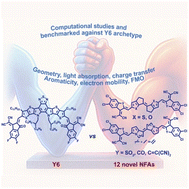
Organic π-conjugated chromophores represent a unique and compelling class of materials with intrinsic properties that are highly valuable for the design and fabrication of optoelectronic devices, such as organic photovoltaic cells (OPV) and organic light-emitting diodes (OLEDs). To meet the specific performance requirements of such applications, tailored chromophores are designed and synthesized using a variety of strategies. Among these, the development of push–pull chromophores—featuring a π-conjugated spacer flanked by electron-donating and/or electron-withdrawing groups—has emerged as a key approach for tuning the bandgap and optimizing optoelectronic behavior. Recently, we have demonstrated the superior performance of novel bridged heteroaryl-vinylene scaffolds as narrow bandgap platforms for the construction of efficient push–pull chromophores. In particular, their integration with electron-deficient acceptors such as indan-1,3-dione derivatives has led to the identification of promising chromophores that outperform the classical Y6 NFA archetype. These new compounds exhibit a favorable balance of electronic and photophysical properties, underscoring their potenial for application in advanced organic electronics.
 Please wait while we load your content...


