


 PLATFORM UPDATE:


Bimetallic layered-double hydroxides anchored on reduced graphene oxide as a bifunctional electrocatalyst for electrochemical water splitting

Abstract
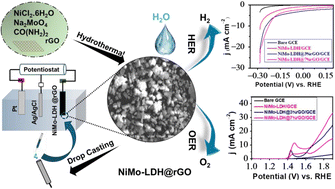
Developing efficient electrocatalysts for both the hydrogen evolution reaction (HER) and the oxygen evolution reaction (OER) is essential for advancing a sustainable energy future. In this study, bimetallic NiMo–LDH nanoflakes were successfully integrated onto reduced graphene oxide using a straightforward hydrothermal method. The composite material was characterized by FTIR, XRD, SEM, EDS, and XPS. Electrochemical evaluations highlighted the impact of rGO content, revealing that the NiMo–LDH with 7% rGO exhibited superior performance in OER, requiring only 230 mV overpotential and a Tafel slope of 60 mV dec−1 at a current density of 10 mA cm−2 in 1.0 M KOH. This enhanced performance is attributed to improved charge separation and transfer at the electrocatalyst/electrolyte interfaces, driven by the synergistic effects of rGO and NiMo–LDH. Furthermore, the composite electrocatalyst showcased bifunctional capabilities, with promising HER performance characterized by favorable overpotential and Tafel slope in 0.5 M H2SO4. Long-term stability was confirmed through chronoamperometry, while electrochemical impedance spectroscopy revealed efficient charge transport across the modified glassy carbon electrode represented as NiMo–LDH@rGO/GCE. Additionally, the synthesized catalyst demonstrated good recoverability, exhibiting appealing onset and overpotentials.
 Please wait while we load your content...


