


 PLATFORM UPDATE:


Efficient oxidative degradation of organic pollutants in real industrial effluents using a green-synthesized magnetite supported on biochar catalyst

Abstract
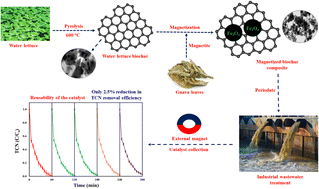
This study investigated the degradation of tetracycline (TCN) antibiotic via catalytic activation of periodate (PI, IO4−) using a novel composite catalyst composed of green-synthesized magnetite nanoparticles supported on water lettuce-derived biochar (MWLB). Characterization results revealed that the magnetic biochar possessed a porous structure, abundant surface functional groups, and high carbon and iron contents. Compared to conventional oxidants such as persulfate, hydrogen peroxide, and peroxymonosulfate, the PI-activated system demonstrated superior degradation efficiency. Process optimization via response surface methodology identified the optimal conditions as follows: PI concentration of 2.05 mM, TCN concentration of 16.52 mg L−1, and catalyst dosage of 0.83 g L−1. Under these conditions, the system achieved 99.64% TCN degradation and 72.14% total organic carbon mineralization. Additionally, the system effectively degraded other persistent organic pollutants, including paracetamol, chlorpyrifos, atrazine, and methylene blue, demonstrating its universality. Mechanistic investigations identified iodate radicals as the dominant reactive species responsible for TCN degradation. The magnetized biochar displayed a remarkable reusability with only a 2.5% reduction in TCN degradation ratio after five repeated cycles. The TCN degradation by-products were identified, and the proposed TCN degradation pathways indicated its transformation into simpler intermediates. A removal ratio of 73.95% was accomplished in the case of tetracycline-laden real pharmaceutical effluent confirming the system's practical applicability. This study presents a sustainable, cost-effective, and efficient PI activator for wastewater remediation that can be utilized in real applications.
 Please wait while we load your content...


