


 PLATFORM UPDATE:


Radiotherapy-chemodynamic cancer therapy using bismuth-based nanoparticles: a synergistic approach for enhanced cancer treatment

Abstract
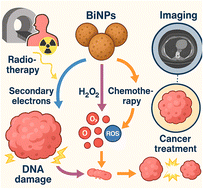
Cancer remains a global health burden, with conventional treatment strategies such as chemotherapy and radiotherapy often constrained by systemic toxicity, therapeutic resistance, and suboptimal tumor eradication. The development of synergistic treatment modalities is essential to enhance efficacy while minimizing adverse effects. Radiotherapy-chemodynamic therapy (RT-CDT) has emerged as a promising approach that couples the DNA-damaging power of ionizing radiation with the oxidative stress induced by chemodynamic reactions in the tumor microenvironment. Central to this strategy are bismuth-based nanoparticles (BiNPs), which serve as both potent radiosensitizers and catalytic agents for reactive oxygen species (ROS) generation due to their high atomic number, robust X-ray absorption, and favorable physicochemical and biocompatibility profiles. This review explores the fundamental mechanisms through which BiNPs enhance RT and CDT efficacy, including their roles in secondary electron generation, ROS amplification, and DNA damage. Various bismuth nanoplatforms—such as bismuth oxide, bismuth sulfide, and bismuth vanadate—are discussed with respect to their structural attributes, catalytic activity, and tumor-targeting capacities. Emphasis is placed on the design and engineering of multifunctional, surface-modified, and hybrid BiNP systems that enable combinatory therapeutic action and real-time monitoring via dual-modality imaging, including computed tomography (CT) and photoacoustic imaging. Preclinical studies demonstrate that BiNP-based RT-CDT significantly inhibits tumor progression, validating their potential in enhancing radiotherapeutic outcomes. Nonetheless, translational challenges persist, including nanoparticle cytotoxicity, in vivo stability, large-scale production, and regulatory hurdles. Addressing these limitations through rational design and safety optimization is critical for clinical application. Looking ahead, the integration of BiNPs into image-guided RT-CDT platforms presents a compelling opportunity for more targeted, efficient, and minimally invasive cancer therapies.
 Please wait while we load your content...


