


 PLATFORM UPDATE:


Innovative electrospun macromolecule-based nanofibers for cationic dye removal and antibacterial applications
 *d
and
*d
and
Abstract
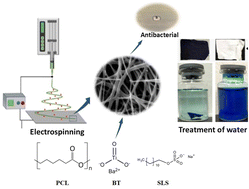
A novel nanocomposite fiber membrane, made from polycaprolactone (PCL), barium titanate (BT), and sodium lauryl sulfate (SLS), was prepared and investigated for its methylene blue (MB) adsorption properties and for antibacterial activity. The nanofibers (SLS-PCL/BT) were fabricated via electrospinning and characterized using SEM, FTIR, AFM, and contact angle measurements. Batch adsorption tests assessed the effects of pH, contact time, sorbent dose, initial dye concentration, temperature, and salt concentration. The maximum uptake of MB uptake was achieved at pH 12, sorbent dose of 60 mg, and 180 min contact time, and at room temperature. The adsorption data exhibited an excellent fit with the Langmuir isotherm model with a maximum adsorption of 68.79 mg g−1. Kinetic studies revealed the adsorption process conformed to a pseudo-second-order model. The nanocomposite fibers demonstrated good reusability over 5 adsorption–desorption cycles. The SLS-PCL/BT nanofiber membrane displayed antibacterial activity against various strains of pathogenic bacteria (S. aureus, B. subtilis, E. coli, and Salmonella) with an inhibition zone of 16.56, 19, 25, and 25 mm, respectively. This study demonstrates that SLS-PCL/BT nanofibers are highly effective, reusable adsorbents for removal of MB from aqueous solutions. Moreover, it has antibacterial properties against some bacterial strains.
 Please wait while we load your content...


