


 PLATFORM UPDATE:

Experimental methodology used for testing in vivo adhesion of composite meshes for incisional hernia repair: a scoping review

Abstract
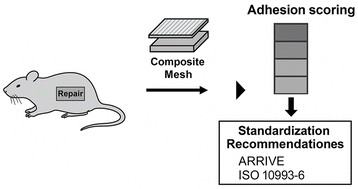
This review investigates the variability in the experimental methodology used in animal studies exploring the optimal composite mesh for incisional hernia (IH) repair. Eight databases were searched from inception to April 1, 2023. Animal studies conducted to evaluate the anti-adhesion effect of the composite mesh were included. Standardized forms were used to extract the experimental design characteristics. The extracted data were presented in tabular format and summarized using frequency analysis. The inherent risk of bias in the included studies was assessed using SYRCLE's risk of bias tool for animal studies. The results showed that 71 studies were included in the final analysis. Rats represented the most common animal (65%) used for studies. Conventional models (92%), high-adhesion models (4%), and abdominal cavity pollution models (4%) were reported in the included studies. The sample size of animals varied between studies (2–31/group). A variety of quantitative (calculation of adhesion area or testing of adhesion strength) and qualitative (45 assessment systems) adhesion assessment methods were reported. One month (41%) and 1 week (30%) were the most common time points used to evaluate the adhesion. The results of the risk of bias assessment showed that, of the 71 animal studies included, only one was a randomized controlled study, and only two studies reported that animal breeders and investigators were blinded. In conclusion, a large number of animal studies have been conducted to explore the ideal intraperitoneal anti-adhesive composite mesh for IH repair. However, these animal studies have significant differences in animal models, implantation procedures, control selection, and adhesion assessment. These differences directly affect the comparability between studies and the reproducibility of the studies.
 Please wait while we load your content...


