


 PLATFORM UPDATE:

Antimicrobial activity of chitosan, alginate, pectin, and cellulose-based biopolymer composites with silver, copper oxide, and zinc oxide nanoparticles

Abstract
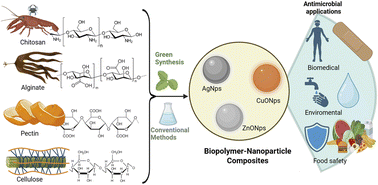
Nanotechnology has revolutionized materials science, particularly through the incorporation of metallic nanoparticles into biopolymers, enhancing their physicochemical, mechanical, and biological properties for diverse applications. Polysaccharide-based biopolymers, such as chitosan, alginate, pectin, and cellulose, play a crucial role in antimicrobial applications due to their unique structural and functional properties. Their combination with metallic nanoparticles further enhances their antimicrobial effectiveness, making them promising materials for biomedical, environmental, and food applications. However, their inherent limitations, including poor mechanical strength and high permeability, necessitate functional modifications. The integration of metallic or metallic oxide nanoparticles (NPs), such as silver (AgNPs), copper oxide (CuONPs), and zinc oxide (ZnONPs), has shown remarkable improvements in antimicrobial activity, thermal stability, and mechanical performance. Green synthesis approaches utilizing plant extracts, microbial processes, and bio-waste have emerged as sustainable alternatives to conventional chemical methods, reducing environmental impact while enhancing NP stability and biocompatibility. This review provides a comprehensive analysis of the synthesis, characterization, and functionalization of polysaccharide-based biopolymer–nanoparticle composites, highlighting their advantages, challenges, and diverse applications. The development of these multifunctional materials offers promising solutions for critical challenges in healthcare, environmental sustainability, and food safety. Future research should focus on optimizing large-scale production, ensuring nanoparticle safety, and expanding the applications of biopolymer–nanoparticle composites through innovative synthesis and crosslinking techniques.
 Please wait while we load your content...


