


 PLATFORM UPDATE:


Production of boron nitride/titanium dioxide composite nanofibers via sustainable electrospinning methods and their environmentally friendly photocatalytic and antibacterial applications†
 *ae
*ae
Abstract
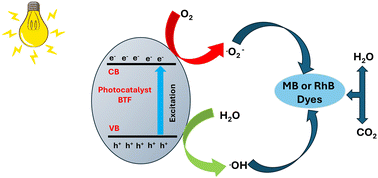
Low-cost and environmentally friendly nanomaterials fabricated using sol–gel, electrospinning, hydrothermal and solvothermal methods are highly important for the removal of dyes (which are important water pollutants) from water sources and for reducing biological activity on the membrane surface of treatment facilities. In this study, boron nitride/titanium dioxide composite nanofibers (BTFs) were synthesized using an electrospinning method. The structural and optical properties of the BTFs were investigated using various analytical techniques, including X-ray diffraction (XRD), scanning electron microscopy (SEM), ultraviolet-visible spectroscopy (UV-vis) and Fourier transform infrared spectroscopy (FTIR), and then, their capability for photocatalytic dye removal and antibacterial activity was studied. SEM analysis of the characterized BTF nanofibers showed that the fiber structures were random, distant from each other and formed networks. Furthermore, the band energy calculated from the UV-vis spectrum was 2.81 eV. Subsequently, the catalytic activity for the removal of methylene blue and rhodamine B dyes from water was determined to be 83.7% and 84.3%, respectively. In addition, the BTF nanofibers exhibited a high antibacterial effect against Escherichia coli, Staphylococcus aureus, Bacillus subtilis and Klebsiella pneumoniae bacteria. In addition, antibacterial tests revealed that the bacterial culture containing BTF nanofibers showed a lethal effect even at low concentrations. Thus, BTF nanofibers are envisaged to play important roles in water purification and microorganism-control applications owing to their advantages of environmental friendliness, low-cost, and sustainability.
 Please wait while we load your content...


