


 PLATFORM UPDATE:


Enantioselective organocatalytic electrochemical α-chlorination of aldehydes

Abstract
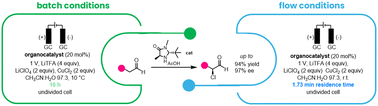
The enantioselective organocatalytic α-chlorination of aldehydes using electrochemistry to activate the enamine intermediate through a SOMO strategy was investigated. Based on mechanistic insights, an improved procedure was developed that directly employs CuCl2 in the electrochemical reaction. Under the optimized setup (potentiostatic conditions of 1 V, glassy-carbon electrodes, and a 0.2 M solution of LiClO4), in the presence of catalytic amounts of a chiral imidazolidinone organocatalyst, the aldehyde reacts with copper chloride(II) and leads to the formation of the corresponding α-chlorinated aldehydes in high yields with high enantioselectivities (up to 97% ee). Thanks to the electrochemical approach, stoichiometric amounts of chemical oxidants were successfully replaced by electrons, enabling a more sustainable and efficient catalytic stereoselective reaction. In addition, the transformation was successfully translated to a continuous flow process, which significantly enhanced productivity and reduced the reaction time to just 1.73 minutes, and the reaction was also performed on a gram scale.
- This article is part of the themed collection: FOCUS: Organic Electrosynthesis
 Please wait while we load your content...


