


Vinyl ether maleic acid block copolymers: a versatile platform for tunable self-assembled lipid nanodiscs and membrane protein characterization

Abstract
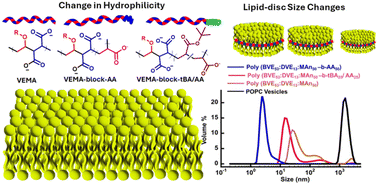
Vinyl ether-maleic anhydride (VEMAn) copolymers were chain extended with n-butyl acrylate (nBA) and tert-butyl acrylate (tBA) blocks using reversible addition–fragmentation chain transfer (RAFT) copolymerization. Subsequently, the copolymers underwent hydrolysis to synthesize vinyl ether-maleic acid (VEMA) copolymers with different tail structures. The nBA block yielded VEMA extended with an acrylic acid (AA) block after hydrolysis. The tBA block gave VEMA extended with a mixture of tBA and AA blocks. This study investigates the effect of VEMA hydrophilicity/hydrophobicity and monomer structure in the second block on the formation and properties of self-assembled lipid nanodiscs. In particular, the size of the polymer–lipid discs and their interaction with a model membrane protein, KCNE1. The findings indicate that both AA and tBA/AA VEMA blocks yield lipid discs, however copolymers with tBA/AA blocks tend to form relatively larger lipid nanodiscs potentially due to steric differences in the copolymer tail. The change in hydrophobicity of VEMA block copolymers affects the resulting dimensions of lipid nanodiscs; similarly, the type of lipid also influences the size of lipid discs. Electron Paramagnetic Resonance (EPR) studies revealed that these block copolymers do not affect the structural dynamics of the KCNE1 protein, confirming their suitability for membrane protein studies in native-like environments. This study demonstrates the compatibility of VEMA-block copolymers with membrane protein systems by enabling control over the size of lipid discs. Furthermore, it provides insight into the self-assembly understanding of these lipid nanodiscs and their interactions with membrane proteins.
- This article is part of the themed collections: Polymer Chemistry Recent HOT Articles and Polymer Chemistry Open Access Spotlight 2025
 Please wait while we load your content...


