


 PLATFORM UPDATE:


Bio-physical insights into the interaction of biocompatible iron oxide nanoparticles with biomolecules: microcalorimetric and spectroscopic evaluation
 a
and
Achal
Mukhija
*a
a
and
Achal
Mukhija
*a
Abstract
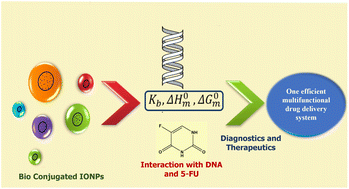
Drug delivery systems (DDSs), despite extensive research, have yet to achieve optimal therapeutic outcomes. In this study, we synthesized amino acid-coated iron oxide nanoparticles (IONPs) to investigate a nano-bio interface through thermodynamic analysis and assess how surface coating influences DDS efficiency. The synthesized systems were characterized using FTIR, XRD, BET, SEM, and DLS techniques. Isothermal titration calorimetry in combination with spectroscopy was employed for interaction studies and to obtain data on the binding and thermodynamics of interaction. Thermodynamic parameters and therapeutic efficiency were correlated with the functional groups of the coating material of the IONPs. Experimental findings imply that coating IONPs with amino acids improves their interactions with DNA and drug-loading efficiency. Comparison of the efficiency of different amino acid-coated IONPs based on the functional group of the coating material reveals the importance of the –OH group over other functional groups. Additionally, results demonstrated how the efficiency of the DDSs changes in the homologous series of amino acids and highlight how the size and length of the side substituent as well as the type of amino acid impact their interaction with DNA and drug loading efficiency with 5-fluorouracil. Correlating the energetics of the interactions with the structure and physical characteristics of amino acids enabled quantitative structure–activity relationship (QSAR) studies and will facilitate the AI-based design of efficient DDSs.
 Please wait while we load your content...


