


 PLATFORM UPDATE:


A critical review on rubriflordilactones A, B, and C: occurrence, structural diversity, bioactivities, and synthesis
 *ac
*ac
Abstract
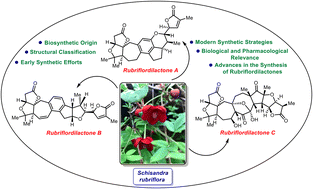
Rubriflordilactones A, B, and C are a class of highly oxidized schinortriterpenoids isolated from Schisandra rubriflora, notable for their complex heptacyclic architectures, dense stereochemical arrays, and promising anti-HIV and antitumor activities. Their intricate molecular frameworks, featuring contiguous quaternary stereocenters and a rare, embedded penta-substituted arene motif, present a formidable challenge for chemical synthesis and render them exceptionally demanding targets for total synthesis. This review encompasses the developments from the first total synthesis reported in 2010 to the most recent advances to date, tracing the evolution of synthetic strategies toward these natural products over the past decade. We detail key methodological breakthroughs, including innovative applications of Morita–Baylis–Hillman adducts, intramolecular Diels–Alder reactions, radical cyclization cascades, transition-metal-catalysed processes such as [2 + 2 + 2] cyclotrimerizations, Catellani reactions, and Ir-catalysed allylations, and bioinspired skeletal reorganizations. We emphasize how convergent fragment couplings, stereoselective cyclizations, and late-stage functionalizations have been orchestrated to overcome synthetic barriers. Furthermore, this review covers how total synthesis has played a pivotal role in resolving stereochemical ambiguities, as exemplified by the structural elucidation of pseudorubriflordilactone B. The collective progress underscores the synergy of modern organic synthesis in tackling the complexities of these natural products, providing a robust foundation for future synthetic endeavors and the development of novel analogs with enhanced therapeutic potential.
 Please wait while we load your content...


