


 PLATFORM UPDATE:

Electrochemical N-sulfonylation of in situ generated indole-based hydrazones and antimicrobial evaluation
 *bc
and
Vikas
Tyagi
*a
*bc
and
Vikas
Tyagi
*a
Abstract
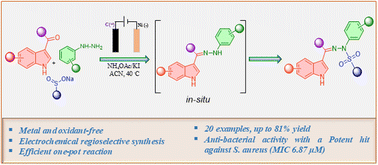
Herein, we report a novel metal-free electrochemical strategy for regioselective N-sulfonylation of in situ generated indole-based hydrazones using readily available sodium sulfinates. The feasibility of the protocol was demonstrated by employing differently substituted aldehydes, hydrazines, and sodium sulfinates to access N-sulfonylated products in up to 81% isolated yield. Furthermore, various control experiments and cyclic voltammetry studies were performed to get valuable mechanistic insights. These studies suggested the formation of indole–phenyldiazenium as an intermediate while ruling out the possibility of any radical formation during this transformation. In addition, the synthesized compounds were tested for antibacterial activity against Gram-positive and Gram-negative pathogens. Among them, compounds 5d, 5e, 5l, and 5q were found to have strong and selective antibacterial activity against Staphylococcus aureus, with 5d being the most potent (MIC = 6.87 μM), while showing only moderate activity against Gram-negative pathogens. Furthermore, scanning electron microscopy (SEM) analysis revealed that the most promising hit (5d) causes significant morphological alterations and exerts its effects by causing considerable cellular damage.
 Please wait while we load your content...


