


 PLATFORM UPDATE:


Catalase enzyme-modified carbon quantum dot nanoparticles with hypoxia alleviation associated with indocyanine green for synchronous augmented photodynamic therapy and cell imaging of melanoma

Abstract
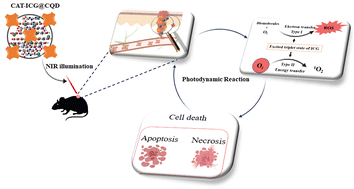
The aim of this study was to synthesize carbon quantum dot nanoparticles (CQD NPs) with a high quantum yield and conjugate them with the enzyme catalase (CAT) for cell imaging and photodynamic therapy (PDT) applications. CQDs were synthesized by a hydrothermal method and purified with a novel method to obtain a high quantum yield. Indocyanine green (ICG) was loaded on the CQDs as a suitable photosensitizer for PDT, and CAT was applied to generate oxygen at the tumor site. Then, the efficacy of the synthesized NPs for photodynamic therapy (PDT) and cell imaging of melanoma cancer cells was investigated under in vitro, ex vivo and in vivo conditions. Characterization results confirmed that the hydrodynamic size of the CAT-ICG@CQD particles was about 51.3 nm. In addition, analysis to detect reactive oxygen species (ROS) demonstrated that free ICG's ROS generation capacity increased significantly (26%) after combining with CAT. Moreover, cell culture assessments revealed that CAT-ICG@CQD could decrease melanoma cell viability by up to 15.66%, with laser illumination in a simulated tumor microenvironment resulting in higher cellular uptake, sustained release and a higher ROS generation capacity in comparison to free ICG. Cell imaging analysis illustrated high fluorescence intensity of ICG in the cytoplasm for CAT-ICG@CQD, confirming its high quantum yield and enhanced cellular uptake of ICG compared to free ICG. An in vivo study on C57BL/6 mice with melanomas revealed that CAT-ICG@CQD exhibits superior tumor growth inhibition through tumor oxygenation, indicating efficient PDT enabled by hypoxia alleviation. The outcome of the present study provided a novel nanoplatform for ameliorating tumor hypoxia, which meets the demands of melanoma PDT due to the high ROS generation efficiency and cell imaging capabilities.
 Please wait while we load your content...


