


 PLATFORM UPDATE:


High-performance all-inorganic CdSe/CdS nanorod-based light emitting diodes enabled by controlled electrophoretic deposition

Abstract
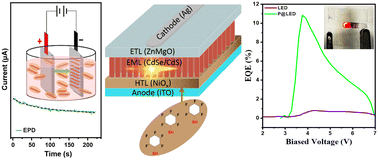
Electrophoretic deposition can be used to form tightly assembled nanocrystal films at a macroscopic scale, offering tremendous possibilities to exploit the unique functional properties of nanocrystals at a device level. Herein, combining the experimentally measured electrophoretic deposition current time trace with an analytical model, we can estimate the effective single particle charge in solution and obtain information on the morphology and thickness of the film. Using this method, we formed vertically aligned, void-free CdSe/CdS nanorod (NR) films as the emissive layers in red-emitting all-inorganic NR light emitting diodes. To further optimize the performance of these LEDs, Pentaflurothiophenol (PF-BT) molecules were used to passivate the nickel oxide hole transport layer (HTL) surface. With the reduced hole injection barrier into NRs, less leakage current at NiOx HTL/NR interface and improved NR film morphology, our best performing NR-LEDs achieved a highest external quantum efficiency of 10.8% with a low turn-on voltage of 2.8 V and a maximum brightness (luminance) of 1735 cd m−2 at 5.5 V in an all-inorganic LED architecture. Our work provides an effective route for the development of next-generation nanocrystal-based LED displays with facile large-area mass production using cost effective methods.
 Please wait while we load your content...


