


 PLATFORM UPDATE:


Upgrading the ferribactin pre-chromophore – synthesis, modification and polymerization
 *b
and
Sabine
Laschat
*a
*b
and
Sabine
Laschat
*a
Abstract
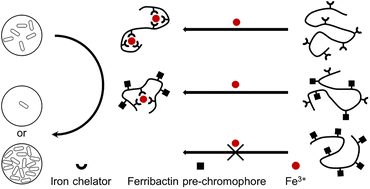
The global rise in antibiotic resistance underscores the urgent need for alternative antimicrobial strategies. One approach involves the conjugation of iron-chelating moieties to macromolecular scaffolds to disrupt bacterial iron homeostasis and inhibit cellular uptake mechanisms. In this work, the pre-chromophoric unit of the siderophore ferribactin served as the structural template for the development of antimicrobial polymer precursors. A series of L-tyrosine and L-DOPA-derived pre-chromophore analogues were synthesized and chemically modified to introduce polymerizable functionalities. These monomers were copolymerized with N-vinylpyrrolidone via reversible addition–fragmentation chain-transfer (RAFT) polymerization to afford well-defined, bifunctional copolymers. Antimicrobial testing of the monomers and polymers showed varying levels of activity, depending on the bacterial species.
 Please wait while we load your content...


