


 PLATFORM UPDATE:

Intelligent stealth andrographolide imprinted drug carrier of poly(2-ethyl-2-oxazoline) with multi-stimuli responsiveness and A549 lung cancer cell cytotoxicity†
 *a
*a
Abstract
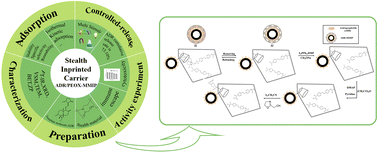
The stealth segment poly(2-ethyl-2-oxazoline) (PEOX) was attempted to be grafted onto the surface of an andrographolide-imprinted polymer (ADR-MMIP) invented in our laboratory to obtain a new intelligent stimuli-responsive drug carrier with better controllable ADR release, anti-cancer, and stealth (ability to evade the immune system) properties. Serial characterization using modern instrumental analysis techniques, including Fourier-transform infrared spectroscopy (FT-IR), X-ray diffraction (XRD), vibrating sample magnetometry (VSM), transmission electron microscopy (TEM) as well as Brunauer–Emmett–Teller (BET) and zeta potential (ZP) analyses, confirmed that the novel target ADR/PEOX-MMIP was successfully prepared. Material performance tests showed that ADR/PEOX-MMIP had favourable stability and exhibited a mere decrease of 14.83% in adsorption capacity after five adsorption–desorption cycles, good selectivity adsorption for ADR with a relative selectivity coefficient of 1.4375, an acceptable ADR loading capacity of 11.46 mg g−1, and satisfactory ADR-controllable release with a maximum cumulative drug release rate of 73.10% in response to pH/redox/light stimulation in vitro and a slower release time of 210 h compared with ADR-MMIP (60 h). Notably, ADR/PEOX-MMIP possessed definite A549 lung cancer cell cytotoxicity, with a maximum cell inhibition rate of 36% at a concentration of 160 μg mL−1 and excellent stealth performance for escaping the non-specific effects of macrophages, which indicate that it should be able to effectively improve the present therapeutic defects of ADR, both in theory and real-world practice, and provide a new idea for the development of intelligent drug carriers in the future. The adsorption mechanism of the prepared target material is also discussed in detail in this study.
 Please wait while we load your content...


