


 PLATFORM UPDATE:


Surface-modified iron oxide nanoprobes in biomedical scaffolds
 †*a
J.
Rivas
*a
†*a
J.
Rivas
*a
Abstract
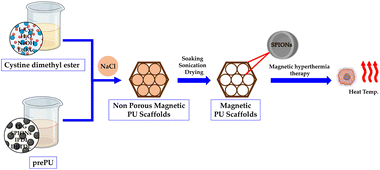
Magnetic (PU) scaffolds incorporating superparamagnetic iron oxide nanoparticles (SPIONs) offer a promising platform for localized cancer therapy. By enhancing the functional performance of these scaffolds through surface modification of iron oxide nanoprobes, their biomedical utility—particularly in targeted therapeutic applications—can be significantly improved. In this study, we report the synthesis and characterization of magnetite nanoparticles (Fe3O4 NPs) functionalized with biocompatible coatings—citrate, polyethylene glycol (PEG), oleic acid (OA), and aluminum hydroxide (Al(OH)3)—and their integration into porous PU scaffolds via a salt-leaching/phase-inversion method. Among all tested formulations, SPIONs@Al(OH) demonstrated superior colloidal stability, magnetic responsiveness, and cytocompatibility. When embedded in PU scaffolds, these magnetic nanocomposites exhibited optimal mesoporosity, homogeneous nanoparticle distribution, and efficient magnetic hyperthermia performance under clinically relevant alternating magnetic fields. This work highlights the synergistic potential of material design and surface engineering in developing next-generation implantable platforms for targeted oncological treatment.
 Please wait while we load your content...


