


 PLATFORM UPDATE:


Engineering shootable mycelium-bound composites (MBCs) as living building materials

Abstract
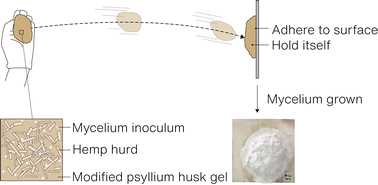
The construction industry greatly contributes to global energy consumption (36%), CO2 emissions (37%), and solid waste (35%), driving interest in bio-based materials such as mycelium-bound composites (MBCs) to reduce the environmental impact. MBCs combine fungal mycelium with agricultural waste to create lightweight, insulating structures with low energy requirements for manufacturing. However, current MBC fabrication methods – typically mold-based or limited scale extrusion-based 3D printing – constrain efficiency, geometric freedom, and scalability for building applications. Here, we introduce a novel shootable MBC formulation that supports vertical deposition by harnessing psyllium husk gel, a plant-derived polysaccharide binder chosen for its availability and unique rheology-modifying capacity. By tuning gel concentration, processing, and mixing protocols, we engineer MBC mixtures with tailored pre-growth mechanical properties that permit stable deposition via shooting. Through systematic characterization, we provide new insights into how material treatment methods influence both process and final MBC properties. Engineered formulations demonstrated consistent shootability over a span of 50 minutes with minimal material loss (<10%), with robust mycelium growth at both the surface and throughout the cross section. To illustrate the construction potential of shootable MBC formulations, we use concrete-inspired spray techniques to shoot a meter-scale MBC layer, unlocking a new paradigm in MBC design that is scalable, form-flexible, and time-efficient.
 Please wait while we load your content...


