


 PLATFORM UPDATE:


Succinate coprecipitation synthesized Cr-doped Fe2O3 as an efficient electrocatalyst for hydrogen evolution reaction in alkaline medium

Abstract
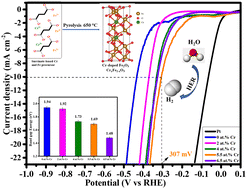
The depletion of fossil fuels and growing environmental concerns have created an urgent global demand for sustainable energy solutions. Among these, hydrogen has emerged as a pivotal energy carrier due to its high energy density and potential for clean combustion. Electrolytic water splitting, especially when powered by renewable energy, offers a promising, carbon-neutral method for hydrogen production. Yet, it is constrained by the slow kinetics of the hydrogen evolution reaction (HER) at the cathode. Thus, obtaining a performant, cheap and environmentally friendly electrocatalyst for HER becomes a big challenge. This study explores the enhancement of HER by developing Cr-doped iron oxide (Fe2O3) nanomaterials, synthesized via a co-precipitation method utilizing succinate ions. Our research demonstrates that Cr-doping significantly modifies the electronic structure and catalytic properties of iron oxide, with optical analyses revealing a bandgap reduction from 1.92 eV to 1.48 eV as Cr3+-concentration increases from 2 to 6.5 atomic percent. The electrocatalytic activity for HER was notably improved, achieving an optimal overpotential of 307 mV at 10 mA cm−2 with a Cr-doping level of 5.5 atomic percent, which outperforms both undoped Fe2O3 and Cr2O3 alone. This performance boost is attributed to the creation of new active sites through lattice defects from chromium substitution into the iron oxide matrix. This investigation not only deepens our understanding of the structure–activity relationships in doped iron oxides but also marks a significant step toward developing efficient, economically viable electrocatalysts for sustainable hydrogen production technologies.
 Please wait while we load your content...


