


 PLATFORM UPDATE:


A porous liquid constructed from single-walled polyoxometalate nanotubes for sustainable extractive–oxidative desulfurization

Abstract
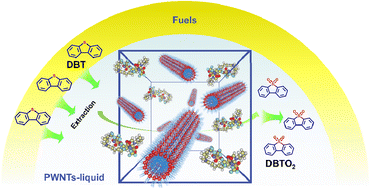
Combining the dual advantages of unique permanent porosity and fluid liquids, porous liquids (PLs) lead to a new frontier in liquid–liquid catalysis. Herein, a type-III PWNTs-liquid was synthesized for the desulfurization of diesel fuels using single-walled polyoxometalate nanotubes (PW12NTs) as the porous framework and the bulky BIm(NTf2) ionic liquid with high steric hindrance and liquid-like fluidity as the solvent. Under the optimized conditions, various aromatic sulfides and nitrides in diesel fuels can be completely removed using 1 wt% PWNTs-liquid. Following 20 consecutive repetitions, the overall performance of the extraction-coupled catalytic oxidation process using the as-prepared PWNTs-liquid decreased by approximately 3.9%, thus demonstrating its good stability. Detailed experiments show that the tubular channels of PWNTs-liquid promote the mass transfer of H2O2 and increase the rate of catalytic reactions. This study highlights the possibility of using porous polyoxometalates as a guest to prepare PLs with enhanced catalytic reactivity, providing new insights for the subsequent development of functional porous liquids.
- This article is part of the themed collection: Green Liquids and Solvents
 Please wait while we load your content...


