


 PLATFORM UPDATE:


Mechanistic insights into S-allyl cysteine's insulin-mimetic role: glucose uptake, receptor kinase interaction, and sensitivity recovery in skeletal myotubes

Abstract
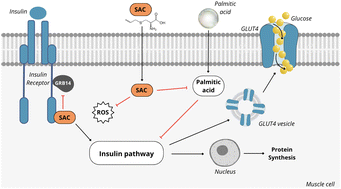
S-Allyl cysteine (SAC), the most abundant sulfur-containing compound present in black garlic, has several biological activities including antioxidant and anti-inflammatory effects, accounting for multiple beneficial roles, among which protection against insulin resistance is proposed herein. Despite these evidences, a mechanistic study supporting its direct involvement in modulating insulin response and in counteracting insulin resistance is still missing. The aim of this study is to evaluate the molecular mechanism of action of SAC in the insulin-dependent metabolic response. For this purpose, the effects of SAC on protein synthesis, glucose uptake, and GLUT4 translocation were assessed in C2C12 skeletal myotubes. The interaction of SAC with the insulin receptor was studied by molecular docking analyses and differential scanning calorimetry. Finally, the counteracting role of SAC against insulin resistance was studied in a C2C12 palmitic acid-induced insulin resistance model. Our results showed that SAC, like insulin, stimulates protein synthesis, glucose uptake and GLUT4 plasma membrane translocation in skeletal myotubes. These last effects were reduced in the presence of the insulin receptor antagonist S961. Moreover, docking and calorimetry results demonstrated the interaction of SAC with the insulin receptor kinase domain. Furthermore, SAC both prevents and reverses the development of palmitic acid-induced insulin resistance significantly, restoring glucose uptake to the levels detected in non-insulin-resistant cells. Altogether, these data provide mechanistic insights into the insulin-mimetic role of SAC, paving the way for future research on new compounds capable of preventing insulin resistance and the consequent onset of metabolic syndrome.
 Please wait while we load your content...


