


 PLATFORM UPDATE:


The circadian variation of amino acids and melatonin in human milk and their potential sleep–wake regulation
 c
Peng
Zhou
*ab
c
Peng
Zhou
*ab
Abstract
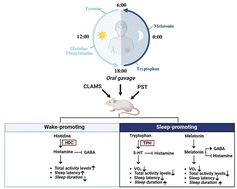
Human milk exhibits dynamic diurnal variations in bioactive components that are conducive to the consolidation of the biological clock in early life, particularly in the establishment of the sleep–wake cycle in infants. The objectives of the present study are to evaluate the circadian rhythm of amino acids and melatonin in human milk and elucidate their potential sleep–wake regulatory mechanism. Amino acids and melatonin were analyzed in 80 human milk samples collected every 6 hours over a 24-hour period from 20 healthy nursing mothers around 30 days postpartum. Different doses of rhythmic components in human milk were administered to normal mice via oral gavage for 7 days. The comprehensive lab monitoring system (CLAMS) and pentobarbital sodium-induced sleep test (PST) were used to evaluate the sleep-inducing and wake-promoting effects. Liquid chromatography-tandem mass spectrometry and enzyme-linked immunosorbent assay were used to detect the levels of neurotransmitters and hormones to identify the underlying mechanisms. Histidine, phenylalanine, tyrosine, tryptophan and melatonin in human milk exhibit circadian variation with higher levels of histidine, phenylalanine and tyrosine during the daytime and higher contents of tryptophan and melatonin at night. High-dose histidine increased total activity levels in the x-direction and sleep latency and decreased sleep duration through the increased level of histamine and decreased level of gamma-aminobutyric acid (GABA) in the hippocampus and hypothalamus of normal mice. In contrast, high doses of tryptophan and melatonin decreased oxygen consumption rate, x-direction total activity levels and sleep latency and increased sleep duration through different neurotransmitter pathways where high-dose tryptophan increased the 5-hydroxytryptamine level while high doses of melatonin increased melatonin and GABA in the hippocampus and hypothalamus of normal mice. In conclusion, the circadian variation of specific amino acids and melatonin in human milk might contribute to the establishment of the sleep–wake cycle in infants.
 Please wait while we load your content...


