


 PLATFORM UPDATE:


Polyphenol-rich extract from Torreya grandis peel attenuates lipopolysaccharide-induced inflammation in RAW264.7 macrophages via inhibition of the TLR4/NF-κB pathway

Abstract
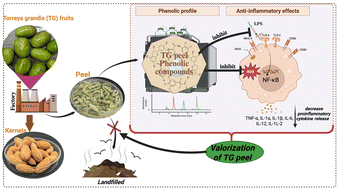
Torreya grandis (TG) peel is an overlooked byproduct, often discarded as waste during the processing of TG nuts, despite its potential as a good source of health-promoting bioactive compounds. To explore the potential of TG peel as a value-added resource, this study examined the phenolic composition and anti-inflammatory activity of its polyphenol extract (TGAP) using a lipopolysaccharide (LPS)-stimulated RAW264.7 macrophage model. The results show that flavonoids were the dominant phenolic class in TGAP, with major compounds including hesperidin O-glucuronic acid, naringenin 7-O-neohesperidoside, chrysoeriol 7-O-hexoside, daidzein, orobol, and epigallocatechin. TGAP treatment (50–200 μg mL−1) significantly reduced intracellular reactive oxygen species (ROS) levels by 8–68% and mitigated LPS-induced inflammation by decreasing nitric oxide production and downregulating pro-inflammatory mediators, including iNOS, COX-2, interleukin-1β (IL-1β), IL-2, IL-6, and TNF-α, at both the mRNA and protein levels. It was found that TGAP decreased Toll-like receptor 4 (TLR4) expression and inhibited NF-κB signaling by preventing IκBα phosphorylation and nuclear translocation of the NF-κB p65 subunit, suggesting that TGAP exerts its anti-inflammatory effects through the inhibition of the TLR4/NF-κB pathway. Molecular docking also revealed that key TGAP polyphenols, including epigallocatechin, chrysoeriol, daidzein, genistein, hesperidin, and naringenin, exhibited strong binding affinities (−7.0 to −8.3 kcal mol−1) with TLR4 and NF-κBp65 proteins, primarily through hydrogen bonding, π-stacking interactions, and van der Waals forces. These results suggest that these compounds play a central role in the anti-inflammatory activity of TGAP. Overall, TGAP is a promising natural anti-inflammatory agent, with potential therapeutic applications in inflammatory disorders.
 Please wait while we load your content...


