


 PLATFORM UPDATE:


Resveratrol attenuates Citrobacter rodentium-infected colitis by remodeling the gut microbiota structure and inhibiting CD4+ cell activation in mice

Abstract
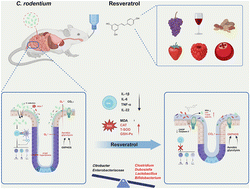
Infectious enteritis is a chronic inflammatory condition of the intestine, mainly characterized by immune cell infiltration and gut microbiota dysbiosis. Resveratrol, a natural polyphenol compound from grapes, berries and peanuts, is known for its antioxidant and anti-inflammatory properties. This study investigated the effects of resveratrol in a murine model of Citrobacter rodentium-induced colitis. Resveratrol ameliorated disease symptoms, body weight loss, colon shortening, and increased intestinal permeability. Histological and immunofluorescence analyses revealed that resveratrol improved intestinal barrier integrity by increasing goblet cells, upregulating MUC-2 expression, reducing crypt hyperplasia, and suppressing epithelial cell apoptosis. Resveratrol significantly decreased the mRNA levels of pro-inflammatory cytokines, namely Tumor Necrosis Factor-α (TNF-α), Interleukin-6 (IL-6) and Interleukin-22 (IL-22), while restoring the percentage of CD4+ cells to normal levels. It also attenuated oxidative stress by enhancing the activities of key antioxidant enzymes, including catalase (CAT), total superoxide dismutase (T-SOD), and glutathione peroxidase (GSH-Px). Furthermore, resveratrol reshaped the gut microbiota by increasing the abundance of obligate anaerobes Clostridium and decreasing the abundance of facultative anaerobes Enterobacteriaceae. The abundance of Lactobacillus and Dubosiella was also significantly increased by resveratrol. In summary, these findings demonstrate that resveratrol supplementation may serve as a promising nutritional strategy to ameliorate C. rodentium colitis by inhibiting CD4+ cell activation and remodeling the gut microbiota.
 Please wait while we load your content...


