


 PLATFORM UPDATE:


Composition of human breast milk macronutrients and microbiome and their correlations in Tibetan lactating women at 2–6 months postpartum
 †bc
Lijun
Chen
*abc
†bc
Lijun
Chen
*abc
Abstract
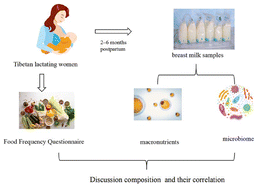
Human breast milk (HBM) provides rich nutrients and beneficial microbes that support infant development. Several factors affect the microbiome and macronutrients from HBM, including geography, environment, and lifestyle; however, the correlation between these aspects remain unclear. In this study, we aimed to analyze the composition of HBM macronutrients and microbiome and their correlations in healthy breastfeeding women from Tibet at 2–6 months postpartum. We collected breast milk samples from 28 healthy mothers and studied their macronutrient and microbiome composition during different sampling times. Our analysis revealed that the dry matter (p = 0.04) content of HBM was significantly lower at 4 months than that at 2 months postpartum and that energy was significantly lower at 6 months than that at 2 months postpartum (p = 0.024). The dominant genera were Pseudomonas, Staphylococcus, and Streptococcus; however, microbial diversity varied at different sampling times. Furthermore, microbes associated with the anabolism of HBM macronutrients dominated the HBM microbiome. These results demonstrate the changes in HBM macronutrient and microbiome composition during lactation and that the HBM microbiome is associated with macronutrient synthesis and metabolism.
 Please wait while we load your content...


