


 PLATFORM UPDATE:


Effects of porcine-derived collagen hydrolysates on 24 h blood pressure profiles, markers for endothelial dysfunction and low-grade inflammation and the retinal vasculature in adults with overweight/obesity: a randomized, controlled trial

Abstract
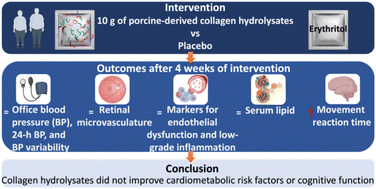
In vitro and animal studies have shown promising effects of collagen hydrolysate on blood pressure (BP), serum lipid profiles, and plasma concentrations of endothelial and inflammatory markers. Therefore, we evaluated in humans the effects of a porcine-derived collagen hydrolysates on office and ambulatory blood pressure (ABP) profiles, retinal microvascular calibers, serum lipids, markers for endothelial dysfunction and low-grade inflammation. Given a possible link between peripheral vascular and brain vascular function, effects on cognitive performance were also explored. Therefore, in this randomized, placebo-controlled parallel trial, 56 middle-aged and older adults with overweight/obesity consumed 10 g porcine-derived collagen hydrolysates or placebo (erythritol) daily for four weeks after a 2-week run-in period. Measurements were performed at the end of the run-in and intervention periods. Collagen hydrolysates consumption did not significantly affect office systolic BP (SBP) (−1 mmHg, 95% CI: −3, 2; p = 0.529), or diastolic BP (DBP) (−1 mmHg, 95% CI: −2, 1; p = 0.449), nor 24-hour SBP (0 mmHg, 95% CI: −4, 4; p = 0.884) or DBP (−2 mmHg, 95% CI: −5, 1; p = 0.195). No significant changes were observed in mean arterial pressure, pulse pressure, nocturnal BP dipping, retinal microvascular calibers, serum lipids, and markers for endothelial dysfunction and low-grade inflammation. Cognitive performance remained unaffected, except for an unexpected increase in movement reaction time (29 ms, 95% CI: 553; p = 0.019). In conclusion, four-week porcine-derived collagen hydrolysate supplementation did not improve cardiometabolic risk markers and cognitive performance in middle-aged and older adults with overweight or obesity. This clinical trial was registered in November 2021 at ClinicalTrials.gov as NCT05282641.
 Please wait while we load your content...


