


 PLATFORM UPDATE:

Transformation of pomegranate (Punica granatum (L.)) leaf waste into a functional beverage and its phytochemical and antioxidant properties

Abstract
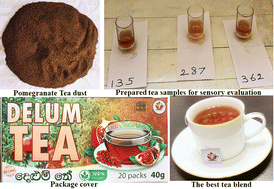
Pomegranate leaves, once valued in traditional medicine for their health benefits, are now often seen as waste in pomegranate cultivation. Renewed interest in their medicinal properties could support more sustainable agriculture. This study aims to explore the bioactive properties of leaves from four pomegranate cultivars and formulate a herbal tea blend. Samples were collected from authenticated plants cultivated under comparable soil and climatic conditions to ensure consistency and reliability in the study. Leaf samples were screened for phytochemicals and antioxidants to select a superior variety for herbal tea formulation. The total phenolic content (TPC), total flavonoid content (TFC), antioxidant capacity, mineral composition, and caffeine content determination and sensory evaluation were conducted using established methodologies. The data were analyzed utilizing ANOVA and the Friedman test using R and SPSS software. The results indicated that pomegranate leaves from all four varieties contained significant levels of TPC, TFC, and antioxidants (DPPH and ORAC) and favourable low caffeine content, demonstrating their suitability as raw materials for herbal tea production. Among the tested blends, a 60 : 40 ratio of pomegranate leaf to black tea received the highest scores across all sensory attributes. Additionally, this blend exhibited a lower caffeine content (0.82% w/w) than commercial black tea (2.23% w/w), establishing it as a healthier, low-caffeine option rich in antioxidants. The findings prove that pomegranate leaf waste can be effectively utilized in the innovative herbal tea industry.
 Please wait while we load your content...


