


 PLATFORM UPDATE:

Endophytic fungi-assisted synthesis of chitosan-based cerium oxide nanoparticles for the preservation of postharvest fruits

Abstract
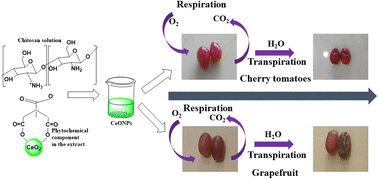
Microbial infestation of postharvest fruits is a serious issue affecting agricultural production and the quality of fresh fruits, especially in areas without advanced storage technologies. This study presents an eco-friendly approach using endophytic fungal (Aspergillus tubingensis, AT, and Rosellinia convexa, RC) extracts, stabilized with biopolymeric chitosan for the synthesis of cerium oxide nanoparticles (CeONPs) for the preservation of postharvest fruits. The CeONPs were prepared by dissolving chitosan in citric acid, followed by the addition of cerium salts and fungal extracts, which facilitated the reduction of Ce3+ to Ce0. The nanoparticles were then purified and dried for further characterization. X-ray photoelectron spectroscopy (XPS) analysis confirmed the presence of Ce3+ and Ce4+ ions, along with Ce–O bonds, while X-ray diffraction (XRD) revealed highly crystalline CeO2 nanoparticles with crystallite sizes ranging from 72.4 to 96.7 nm. The materials exhibited hydrophilic properties, as evidenced by water contact angles (WCAs) between 58.95° and 69.31°, ensuring effective adhesion to fruit surfaces for fungal inhibition. Additionally, the chitosan-stabilized CeONPs demonstrated significant antifungal activity, reducing moisture loss and extending the shelf life of cherry tomatoes and grapefruits during storage. This study highlights a sustainable and efficient method for postharvest fruit preservation using biogenic CeONPs.
- This article is part of the themed collection: 2026 Chinese New Year and Lunar New Year Collection: Food
 Please wait while we load your content...


