


 PLATFORM UPDATE:


Interfacial redox chemistry-driven formation and inhibition of nanoparticles in ultrasonic-humidifier microdroplets
 *ab
*ab
Abstract
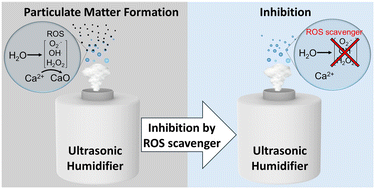
Indoor air quality plays a critical role in human health, particularly due to prolonged exposure in enclosed environments. One major indoor air pollutant is fine particulate matter (PM 2.5), which penetrates deeply into the respiratory tract due to its small size. Previously, we reported that water microdroplets undergo spontaneous oxidation to form reactive oxygen species (ROS), and metal ions dissolved in microdroplets are reduced by electrons donated from the oxidation, forming metal nanoparticles without the need for chemical reducing agents. Because tap water used in household humidifiers typically contains metal ions such as calcium, sodium and magnesium, we hypothesize that these ions could form metal nanoparticles in microdroplets generated by ultrasonic humidifiers. To investigate this hypothesis, we operated a household humidifier with tap water and analyzed the resulting airborne particles. Measurements using both a PM monitor and dynamic light scattering (DLS) revealed the formation of metal nanoparticles in aerosolized tap water microdroplets, while no particles were detected in deionized water microdroplets. To further confirm the mechanism, we introduced electron and ROS scavengers into tap water and observed either complete inhibition or significant reduction in nanoparticle formation. Adding ROS scavengers to tap water reduced the particulate matter concentration by up to 90.4% compared to tap water alone. These results demonstrate that ROS-driven water oxidation and subsequent electron donation are central to nanoparticle production in humidifier microdroplets. This study elucidates the underlying physicochemical mechanism of nanoparticle generation in ultrasonic humidifiers and proposes a practical mitigation strategy using ROS scavengers.
 Please wait while we load your content...


