


 PLATFORM UPDATE:


Ion-driven cell wall disruption enables silver nanoparticle penetration in freshwater algae: evidence from core–shell dissolution tuning

Abstract
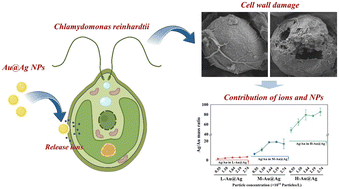
Nanoparticles (NPs) are increasingly explored for applications in algal biotechnology, drawing growing attention to nano–bio interactions. Among them, silver nanoparticles (AgNPs) have attracted attention for their potent biological effects. However, the mechanisms by which they penetrate into the algal cells remain poorly understood, primarily due to the indistinguishable contributions of released ions versus the NPs themselves. In this study, the mechanisms by which AgNPs penetrate algal cells were investigated, using engineered Au@Ag core–shell nanoparticles to decouple the effects of dissolution from other physicochemical properties. Specifically, three types of Au@AgNPs with identical size (20 nm) and surface chemistry but different Ag release profiles were synthesized by varying the size of the gold core. It is demonstrated that the AgNPs alone were unable to penetrate the cell wall of the freshwater phytoplankton Chlamydomonas reinhardtii. Instead, the release of Ag ions by the surface adsorbed AgNPs induced significant damage to the cell wall, which subsequently allowed AgNP entry and internalization. Quantitative analysis revealed that over 75% of the accumulated Ag was internalized in its ionic form, and more than 89% of total Ag in the algae existed in the particulate form. The presence of dissolved organic matter alleviated not only the bioaccumulation and toxicity of NPs, but also influenced the intracellular biotransformation of Ag. This study provided novel insights into the penetration mechanisms of AgNPs and presents the quantitative distinction between the contributions of ions and AgNPs.
 Please wait while we load your content...


