


 PLATFORM UPDATE:

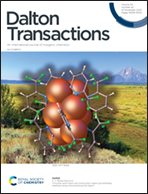
Bimetallic platinum(ii) complexes with bridging di-NHC and N^C^C ligands: synthesis and photophysical properties

Abstract
Three new bimetallic Pt(II) compounds of the type [{Pt(dmtppy)}2{μ-(ImMe)2(CH2)n}] [n = 1 (1), 3 (2), 6 (3)], where dmtppy is the dimetalated tridentate N^C^C ligand 2-(4,4′′-dimethyl-[1,1′:3′,1′′-terphenyl]-5′-yl)pyridine and ImMe is N-methylimidazol-N-yl-2-ylidene, have been synthesized in order to explore their ability to form molecular assemblies that affect their luminescence. Restricted rotation around the Pt–carbene bond leads to mixtures of atropisomers, which hinder the growth of single crystals. The complexes show efficient emissions with high phosphorescence quantum yields in 2 wt% doped PMMA films at 298 K (PLQY: 73–77%). Significant modifications of their photophysical properties in fluid solution are observed upon variation of the solvent, with the highest efficiencies found in 2-methyltetrahydrofurane (up to 63% quantum yield for complex 3). In the case of complex 1, which contains the shortest linkage, the formation of excimers in MeCN and MeOH causes a significant quenching of the emission, with a substantial decrease in the quantum yield.

- This article is part of the themed collections: Celebrating International Women’s Day 2026: Women in Inorganic Chemistry and Dalton Transactions HOT Articles
 Please wait while we load your content...


