


 PLATFORM UPDATE:

Silver-loaded hollow copper sulfide particles for antibacterial therapy
 *ab
Hongqian
Chu
*ab
*ab
Hongqian
Chu
*ab
Abstract
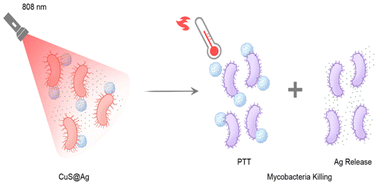
The misuse of antibiotics has accelerated the spread of antibiotic resistance (AR), making it a major global health threat. Drug-resistant bacteria, such as Mycobacterium tuberculosis (M. tb), Staphylococcus aureus (S. aureus), Escherichia coli (E. coli), and Pseudomonas aeruginosa (P. aeruginosa), continue to cause severe infections worldwide. This underscores the need for alternative antibacterial strategies. Photothermal therapy (PTT) is an appealing antibacterial approach with excellent biocompatibility and the ability to overcome AR; however, its effectiveness is often limited by the heat resistance of bacteria. In this study, a stepwise preparation method was employed, where a hollow copper sulfide (CuS) structure was first synthesized using a templating method, followed by the reduction of silver nanoparticles (Ag NPs) on its surface to obtain the CuS@Ag hybrid nanostructure. In vitro, Bacillus Calmette-Guérin (BCG) was selected as a model for M. tb in the antibacterial activity testing. Briefly, BCG was treated with 0.02 mg mL−1 CuS@Ag, followed by exposure to 808 nm laser irradiation for 6 minutes, and then incubated at 37 °C for 24 hours, achieving an antibacterial rate of 94.8%. Additionally, E. coli and S. aureus were subjected to the same conditions and incubated at 37 °C for 1 hour, achieving antibacterial rates of 33.5% and 49.4%, respectively. At a high 1.02 mg mL−1 concentration, CuS@Ag exhibited 100% antibacterial efficacy against BCG, E. coli, S. aureus, and P. aeruginosa. Overall, our results demonstrate that CuS@Ag effectively combines the controllable photothermal therapeutic properties of CuS with the antibacterial activity of Ag nanoparticles, resulting in potent antimycobacterial and broad-spectrum antibacterial effects.
 Please wait while we load your content...


