


 PLATFORM UPDATE:


Cross-laboratory validation of machine learning models for copper nanocluster synthesis using cloud-based automated platforms

Abstract
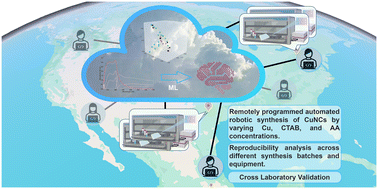
The integration of machine learning (ML) into materials science has the potential to accelerate material discovery and optimize properties. However, the reliability of ML models depends heavily on the consistency and reproducibility of experimental data. In this study, we present a methodology to combine automated, remotely-programmed synthesis protocols with ML to enable data-driven materials discovery. Experiments were programmed and conducted remotely through robotic syntheses at cloud laboratories, using multiple different liquid handlers and spectrometers across two independent facilities (Emerald Cloud Lab, Austin, TX and Carnegie Mellon University Automated Science Lab, Pittsburgh, PA). This multi-instrument approach ensured precise control over reaction parameters, eliminated both operator and instrument-specific variability, and enabled generation of high-quality datasets for ML training. From only 40 training samples, our approach predicts whether specific synthesis parameters will lead to successful formation of copper nanoclusters (CuNCs) with interpretable models providing mechanistic insights through SHAP analysis. Our workflow demonstrates how remotely accessed/cloud laboratory infrastructure coupled with ML can transform traditionally manual processes into autonomous, predictive systems. This multi-instrument validation demonstrates reproducibility critical for reliable ML-driven materials discovery and for advancing automated materials synthesis beyond single-laboratory demonstrations.
 Please wait while we load your content...


